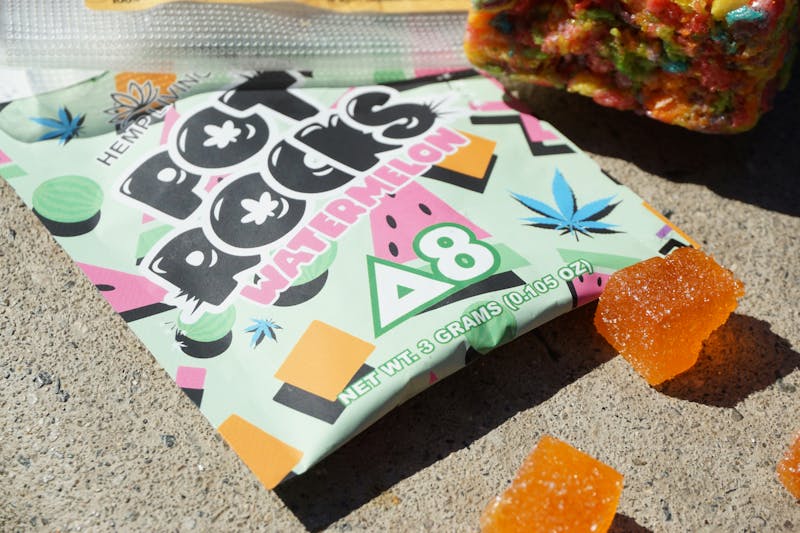
The United States Court of Appeals for the Armed Forces (CAAF) recently issued an important decision in United States v. Bass, a case addressing whether a service member can be convicted for violating a Navy order banning hemp-derived products based largely on positive THC-8 urinalysis results. The ruling is significant for active-duty personnel, veterans, and attorneys handling military justice and discharge upgrade cases because it recognizes the practical reality that hemp-derived products are widely available, often mislabeled, and not always knowingly consumed.
At the center of the case was ALNAV 074/20, a Navy-wide message issued after federal law changed to legalize industrial hemp. The order prohibited Sailors and Marines from using products made or derived from hemp, including CBD, while also recognizing that some individuals may use such products without knowing they were hemp-derived and that a reasonable lack of knowledge can be a defense. The order itself warned that hemp products may contain appreciable THC levels, may omit THC from the label, and may list inaccurate THC concentrations, making it unsafe to rely on packaging alone.
In Bass, a Marine Gunnery Sergeant was convicted at a special court-martial of two specifications of violating paragraph 5 of ALNAV 074/20 by wrongfully using THC-8, in violation of Article 92, UCMJ. The military judge sentenced him to reduction to E-5 and a reprimand, and the lower military appellate court affirmed. CAAF, however, reversed, set aside the findings and sentence, and authorized a rehearing.
Why CAAF Reversed
CAAF granted review on two issues: whether the military judge improperly admitted evidence of prior positive urinalysis results from an earlier case in which Bass had been acquitted, and whether the military judge erred by relying on a “permissive inference” to conclude that Bass knowingly used a hemp-derived product.
The court ruled for Bass on both points. First, it held that the military judge abused his discretion in admitting the prior THC-8 urinalysis results and related testimony under Military Rule of Evidence 404(b). CAAF explained that the earlier evidence did not fit the narrow “doctrine of chances” theory because Bass did not repeat the same fact-specific innocent ingestion defense at the later trial. Instead, the earlier evidence merely encouraged an improper propensity argument: he tested positive before, so he must have knowingly used THC-8 again.
Second, and more broadly, CAAF held that a positive THC-8 urinalysis result alone cannot rationally support a permissive inference that a service member knowingly used hemp or a hemp-derived product under ALNAV 074/20. The court distinguished traditional controlled-substance cases under Article 112a, where positive tests may support an inference of knowing and wrongful use, because hemp-derived products are different: they are lawfully sold in mainstream retail settings, mislabeling is common, and urinalysis cannot reveal intent, route of ingestion, dosage, circumstances of exposure, or even whether the user felt psychoactive effects.
That distinction matters. The Government still had to prove beyond a reasonable doubt that Bass either knew the product he used was hemp or hemp-derived, or that any lack of knowledge was unreasonable. According to CAAF, the urinalysis evidence alone was not sufficient.
Why This Decision Matters
This opinion is likely to affect how military prosecutors, defense counsel, and commands approach THC-8 and related hemp-derived product cases. CAAF recognized that these cases are not automatically comparable to traditional illegal drug prosecutions. When a substance is commercially available, potentially mislabeled, and embedded in everyday consumer products, knowledge becomes a much more complicated factual issue.
The decision also underscores an important point in litigation: a positive urinalysis is not always the end of the story. In Bass, the Government’s own expert acknowledged that testing could not establish intent and could not rule out unknowing ingestion. That testimony became highly important once CAAF focused on the knowledge element.
For service members currently facing investigation or separation based on THC-8 or similar substances, Bass offers a strong framework for challenging assumptions about knowing use. It may also be important in administrative separation cases, where commands sometimes rely heavily on drug test results without fully considering the unique issues surrounding hemp-derived products.
Discharge Upgrades for Service Members Separated Over THC-8 or Hemp-Derived Products
The implications of Bass extend beyond courts-martial. Many service members have been administratively separated or otherwise discharged for allegations involving THC-8, CBD-related products, or other hemp-derived substances. In some cases, those discharges may have been based on a simplified assumption that a positive test necessarily proved intentional misconduct.
This decision provides support for challenging that assumption. CAAF expressly recognized that positive THC-8 urinalysis results alone do not necessarily establish knowing use of a hemp-derived product under ALNAV 074/20. It also emphasized that hemp products may be mislabeled and that unknowing ingestion is contemplated by the order itself.
For former service members seeking a discharge upgrade, that reasoning can matter. A petition to a Discharge Review Board or Board for Correction of Military/Naval Records may be strengthened by evidence showing the alleged misconduct involved THC-8 or another hemp-derived product, that the member did not knowingly ingest a prohibited product, that the separation process failed to account for mislabeling or lawful civilian availability, or that the characterization of service was too harsh in light of the uncertainty surrounding knowledge and intent.
The attorneys at MJA can help by reviewing the discharge paperwork, urinalysis records, command correspondence, separation packet, service history, and any evidence regarding the product involved. From there, we can assess whether there are grounds to argue factual error, inequity, disproportionality, or procedural unfairness and prepare a focused discharge-upgrade application. Where appropriate, we can also develop evidence showing honorable service, rehabilitation, post-service accomplishments, and the real-world harm the discharge has caused to employment, education, benefits, and reputation.
Final Takeaway
United States v. Bass is an important military justice decision because it recognizes that THC-8 cases are legally and factually different from classic controlled-substance prosecutions. A positive test, standing alone, does not automatically prove knowing use when hemp-derived products are widely available and frequently mislabeled.
For service members and veterans, that reasoning may be highly relevant not only in pending cases but also in efforts to challenge adverse discharge decisions tied to THC-8 allegations.
If you or a loved one is under investigation for or was discharged or separated after an allegation involving THC-8, CBD, or another hemp-derived product, now is the time to have that case reviewed carefully. Contact MJA today for your consultation.