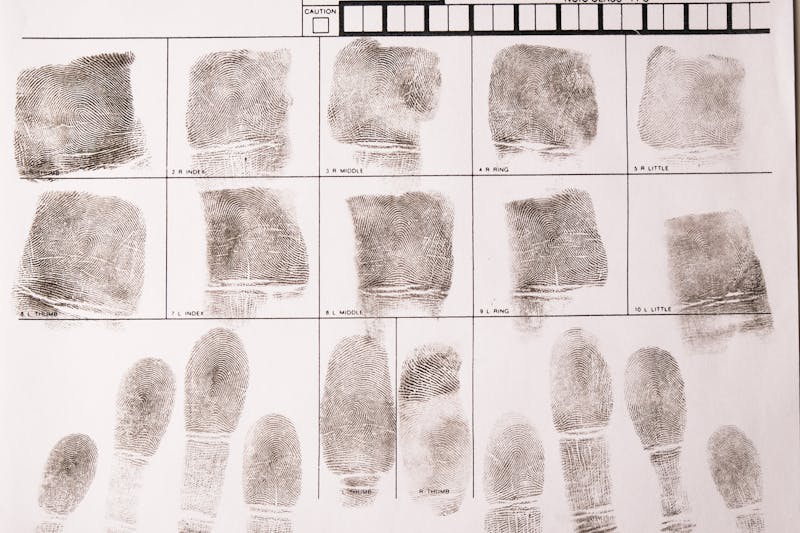
If a service member is titled during a military investigation, the consequences may extend well beyond the investigation itself. In some cases, a service member’s DNA, fingerprints, or other identifying information may be entered into federal law enforcement databases that remain accessible for years—or even decades.
Those records can affect future opportunities, including employment, volunteer work, security clearances, firearm eligibility, and background investigations. Below is an overview of five major databases that may be affected after a military investigation.
MJA has helped service members across the military seek expungement of titling and DNA records. If you have questions about your situation, contact MJA to learn more.
1. Combined DNA Index System (CODIS)
The Combined DNA Index System (CODIS) is an FBI-run national DNA database. Within the Department of Defense, DNA collected from service members during a criminal investigation is submitted to the U.S. Army Criminal Investigations Laboratory for analysis and entry into CODIS.
A service member’s DNA is generally collected at the same time as fingerprints when there is probable cause to believe the person committed a qualifying offense. If DNA was not previously collected, it may also be collected upon preferral of charges, entry into pretrial confinement, or conviction.
Qualifying offenses include offenses under the UCMJ or United States Code punishable by imprisonment, which is nearly every military offense. Certain non-serious offenses are excluded, including drunkenness, vagrancy, disturbing the peace, curfew violations, loitering, false fire alarms, non-specific suspicion or investigation charges, and minor traffic violations.
Once entered, DNA may be compared against other DNA profiles to help solve crimes and identify serial offenders. Entries remain unless expungement is requested and granted.
For military members, CODIS entries may be expunged if there is no conviction at a general or special court-martial. Examples can include cases resolved by nonjudicial punishment, administrative separation, summary court-martial referral, dismissal or withdrawal of charges, or reversal on appeal.
2. Defense Central Index of Investigations (DCII)
The Defense Central Index of Investigations (DCII) is a DoD index of investigations and certain personnel security determinations. It is maintained by the Defense Counterintelligence and Security Agency.
A person may be entered into DCII based on credible information that the person committed a criminal offense. DoDI 5505.07 defines credible information as information disclosed or obtained by a DoD law enforcement activity that, considering the source, the nature of the information, and the totality of the circumstances, is sufficiently believable to lead a trained DoD law enforcement person to presume the facts in question are true.
Victims and “incidentals” may also be identified in DCII. An incidental is a person or entity associated with a matter under investigation whose identity may later be useful for law enforcement or security purposes.
Importantly, entry into DCII is administrative only and does not imply guilt or innocence. Even so, the record may be used during criminal, background, and security clearance investigations, and entries remain in the database for 75 years.
Removal may be possible if probable cause did not, or does not, exist to believe the offense occurred or that the indexed person committed it. The governing instruction also allows consideration of broader “interest of justice” factors, including the lack of corroborating evidence and the nature and outcome of any adverse action taken.
3. Interstate Identification Index (III)
The Interstate Identification Index (III) is an FBI national database of electronic fingerprints and criminal history information for persons who have been arrested.
Entry into III is based on arrest following a probable cause determination that the person committed a qualifying offense punishable by imprisonment. As with CODIS, entry is required for every UCMJ offense punishable by imprisonment, although certain non-serious offenses are excluded.
III stores identifying information such as name, aliases, date and place of birth, Social Security number, identifying marks, scars, tattoos, arrest information, charges, dispositions, and electronic fingerprints.
A III entry creates a national criminal history record that may affect employment, volunteer opportunities, security clearances, and firearm eligibility. Removal may be possible if there was no probable cause at the time of indexing or if the offense did not qualify for indexing.
4. National Crime Information Center (NCIC)
The National Crime Information Center (NCIC) is an FBI-run system designed for the rapid exchange of criminal justice information among law enforcement agencies. It helps agencies apprehend fugitives, locate missing persons, recover stolen property, and identify terrorists.
NCIC includes 21 files, including records involving sex offenders, protection orders, missing persons, wanted persons, unidentified persons, suspected terrorists, supervised release, immigration violators, violent persons, gang members, identity theft, and stolen property.
A service member may be entered into NCIC if the criteria for one of those files are met. Information in NCIC is accessible to military and civilian law enforcement agencies and may be used to identify, locate, or apprehend individuals, or to recover stolen property.
Removal is generally appropriate once the qualifying basis for entry no longer exists. For example, a military deserter record should be removed once deserter status has been lifted following apprehension or return to military authority.
5. National Instant Criminal Background Check System (NICS)
The National Instant Criminal Background Check System (NICS) is an FBI-run database of persons prohibited from possessing, receiving, shipping, or transporting firearms, ammunition, or explosives under federal law.
A person may be entered into NICS if they fall within one of the prohibited categories under federal law. Those categories include certain criminal convictions, fugitives from justice, unlawful users of controlled substances, certain mental health adjudications or commitments, certain noncitizens unlawfully in the United States, dishonorable discharge or dismissal, renunciation of U.S. citizenship, certain qualifying court orders, misdemeanor crimes of domestic violence, and certain pending charges.
Entry into NICS can result in immediate denial of the ability to possess, receive, ship, or transport firearms, ammunition, or explosives. Removal may be possible if the legal criteria for entry are not met.
Why This Matters
A titling or indexing decision can affect far more than a single investigation. Depending on the database involved, it may affect:
When Removal May Be Possible
Depending on the database and the facts of the case, removal or expungement may be possible where:
-
the legal standard for entry was not met
-
probable cause did not exist
-
the offense did not qualify for indexing
-
the matter ended without a qualifying conviction
-
the interests of justice support expungement
Protect Your Future
Criminal titling is a serious administrative action that can negatively affect a service member’s quality of life and future opportunities for decades. If you were titled and indexed during an investigation and have questions about your appeal options, contact MJA to learn more.